Tree Cabling & Bracing Services in Phoenix, AZ
A mature tree with heavy limbs, split unions, or weak crotches may not need removal right away. Performance Tree Services and Landscape provides tree cabling and bracing services in Phoenix, AZ, using support planning, hardware placement, and pruning guidance to help reduce structural failure risk.
Protecting The Tree Without Fighting Its Natural Movement
Tree cabling and bracing start with understanding where the tree carries stress. Heavy limbs, including bark, narrow branch unions, storm cracks, and unbalanced canopy weight, all affect whether structural tree support systems can help preserve the tree safely.
Limb Stress
Heavy lateral limbs can pull against weak unions, especially after fast growth, wind exposure, poor past pruning, or uneven crown development.
Union Strength
Weak tree crotches, split leaders, included bark, and old storm cracks need careful inspection before hardware or pruning decisions are made.
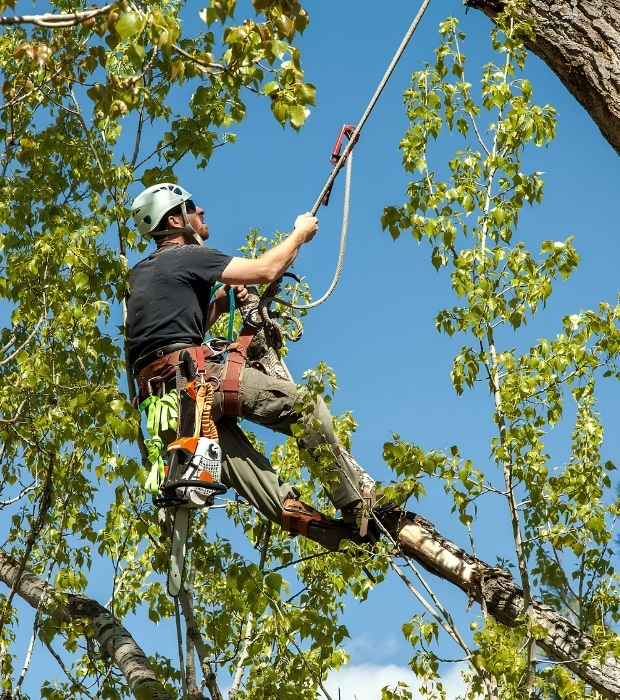
Why Tree Support Takes Inspection
Cabling is not meant to make every risky tree safe. Performance Tree Services and Landscape evaluates trunk condition, branch attachment, canopy weight, decay signs, and target zones before recommending professional tree cabling installation, bracing rods, pruning, or removal when support is not enough.
Risk Reading
Tree failure risk assessment looks at cracks, decay pockets, codominant stems, root stability, canopy load, nearby structures, and storm exposure.
Hardware Planning
Tree cabling hardware must match limb size, movement, attachment points, installation angle, and the type of support the tree needs.
Pruning Balance
Load reduction pruning may be needed before cabling, especially when heavy branch ends create leverage that hardware alone should not carry.
Preservation Focus
A support system for mature trees can help protect valuable shade, landscape character, and canopy structure when the tree remains viable.
Get The Required Tree Support
When a heavy branch hangs over a roof, driveway, patio, walkway, or neighboring tree, support planning can reduce risk before the damage happens.

Cabling, bracing, and selective pruning work best when the weak point is addressed before fresh cracking appears.
See How Structural Tree Care Preserves Shape
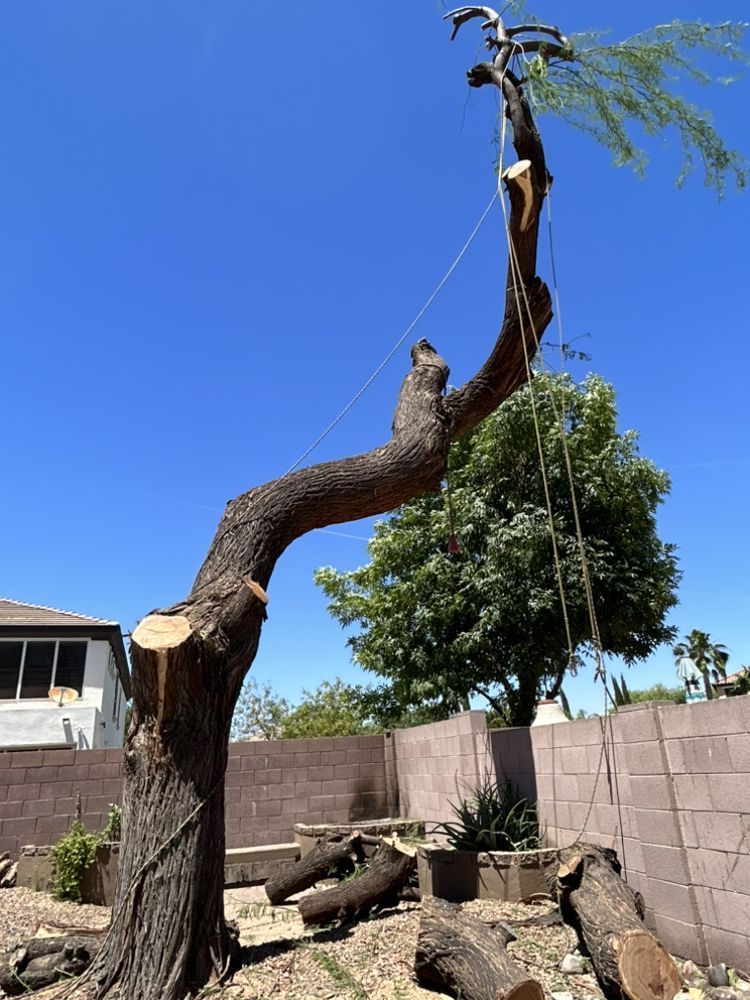
Our support work focuses on mature trees, heavy limbs, weak unions, braced sections, cleaner canopies, and trees preserved with smarter risk planning.


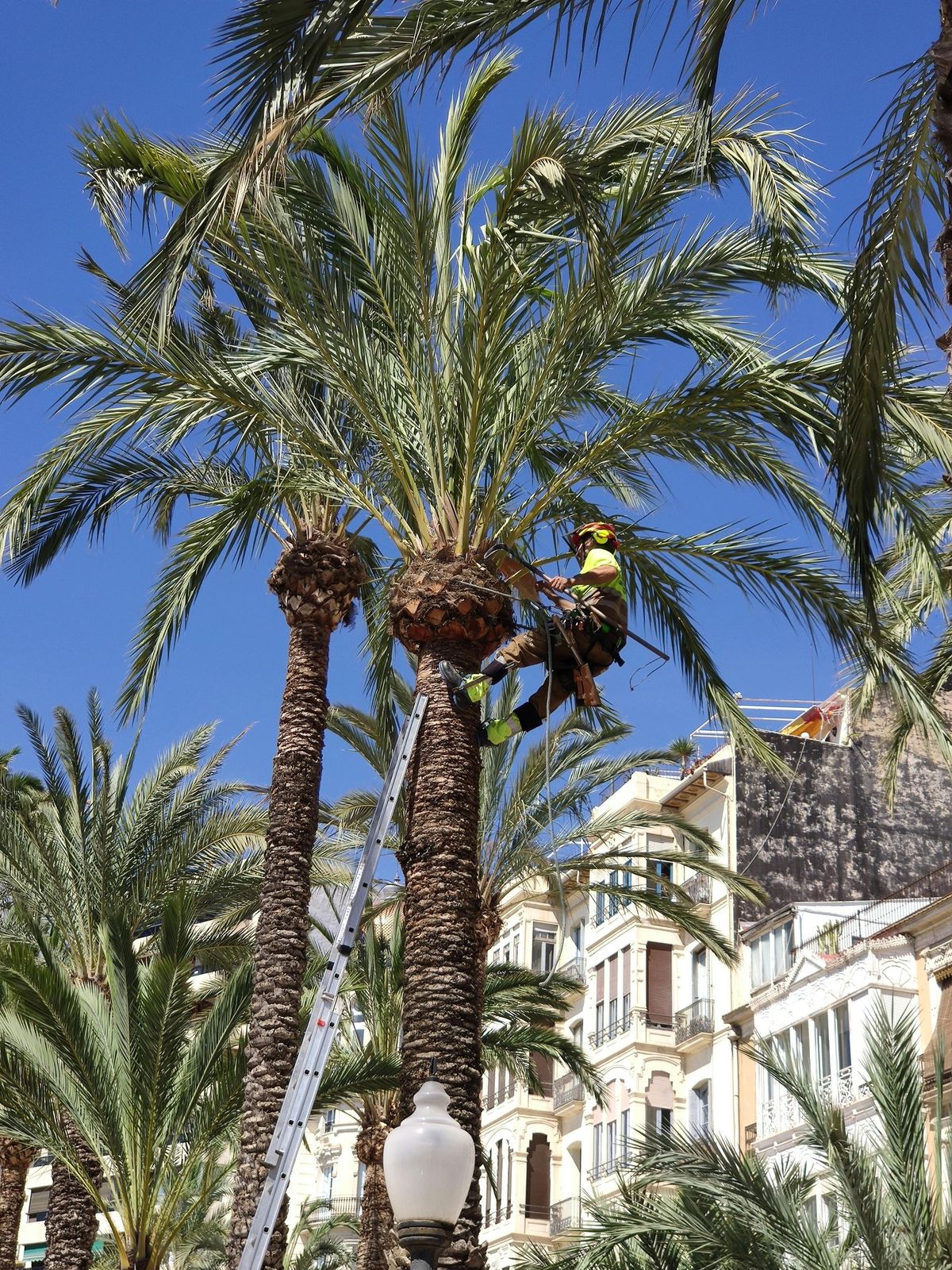

Our Tree Support Process
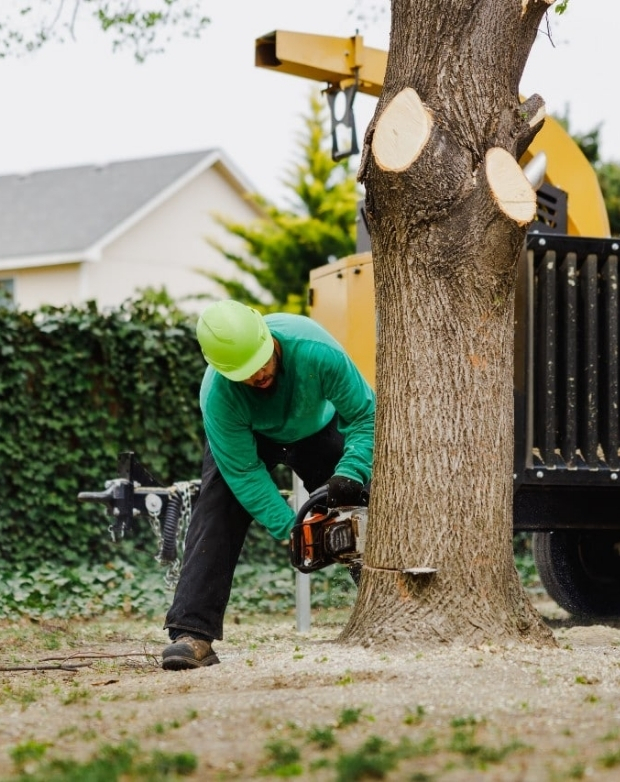
Every support recommendation begins with how the tree is built. The crew reviews branch unions, load direction, canopy weight, hardware placement, and whether pruning should reduce strain first.
01
Structure Review
We inspect weak crotches, codominant stems, limb weight, cracks, included bark, decay, target areas, and existing canopy imbalance.
02
Support Install
Dynamic cabling systems, static bracing rods, and hardware placement are selected according to movement, stress, and structural weakness.
03
Follow-Up Care
Supported trees may still need monitoring, pruning, hardware checks, and future adjustments as growth, storms, and canopy weight change.
Tree Support Work For Phoenix Homeowners
Some trees are worth saving when their structure can be managed responsibly. A good support plan does not promise a tree will never fail. It reduces strain, improves risk control, and helps homeowners make a clearer decision between preservation, pruning, and removal.
Posted on GoogleTrustindex verifies that the original source of the review is Google. Highly recommend Leismar and his crew! After reaching out, we had a competitive and fair quote in hand within 24 hours; impressive responsiveness. They tackled all 14 of our palm trees efficiently, and the crew was professional and courteous throughout. What really stood out was how thoroughly they cleaned up the yard afterward! We'll definitely be calling Leismar again for future tree trimming. Look no further if you want reliable, quality work at a fair price!Posted on GoogleTrustindex verifies that the original source of the review is Google. What an incredible tree service company. They are friendly and very professional. They know exactly what they are doing. I added a before and after of my backyard.Posted on GoogleTrustindex verifies that the original source of the review is Google. Excellent service. Highly recommend Esman. He gave us the lowest quote out of 7 companies. We had 2 palm trees 15-25 ft that needed trimming. Great communication, same day service, efficient, on time, and cleaned up back yard beautifully. Very professional. Will be using again in the future.Posted on GoogleTrustindex verifies that the original source of the review is Google. Great service and attention to detail. Trimmed 3 trees and removed one, and kept my canopy in tact and set me up for a safer monsoon season. Fast, responsive and did the work the next day after a quote . Very nice guy and a great local small business. Good price for the quality of work. Highly recommend.Posted on GoogleTrustindex verifies that the original source of the review is Google. These guys were great! I needed a stump gone for new landscape in my front yard and they provided me an estimate the evening before and came by the next morning. The price was the best I found and they even went the extra mile digging slightly deeper to help with the landscaping I was getting done. I highly recommend Performance Tree Service!Posted on GoogleTrustindex verifies that the original source of the review is Google. If you’re looking for a reliable, skilled, and professional tree trimming service, I highly recommend them. Great work, fair pricing, and outstanding results! 🌳
Cabling & Bracing Across The Phoenix Area
Performance Tree Services and Landscape helps homeowners across the Phoenix area with tree cabling and bracing, tree support for heavy limbs, weak branch stabilization, support hardware planning, and pruning guidance. Each job is shaped around tree conditions, access, canopy load, and nearby property risk.
- Phoenix
- Scottsdale
- Paradise Valley
- Glendale
- Peoria
- Mesa
- Chandler
- Gilbert
- Tempe
- Fountain Hills
- Sun City
- Sun City West
- Surprise
- Goodyear
- Avondale
- Buckeye
- El Mirage
- Queen Creek
- Apache Junction
- Tolleson
- Litchfield Park
- Youngtown
- Carefree
- Cave Creek
Frequently Asked Questions
When is cabling better than removing a heavy tree limb?
Cabling may be useful when the limb is structurally important, still healthy, and worth preserving, but needs added support because of weight, spread, or a weak union. Removal may be better when decay, cracks, or poor attachment make the limb too risky to retain.
What is the difference between tree cabling and tree bracing?
Cabling usually supports limbs higher in the canopy by limiting excessive movement between branches. Bracing often uses rods through weak unions or split sections to add internal support. Some trees need one method, while others need both, plus pruning to reduce load.
Can cabling prevent storm damage during monsoon winds?
Tree cabling and bracing can reduce movement and strain at weak points, but they cannot guarantee storm damage prevention. In Phoenix, support systems work best with crown inspection, load reduction pruning, healthy wood, proper hardware placement, and realistic risk management.
How do professionals decide where tree cabling hardware should be installed?
Hardware placement depends on branch size, attachment strength, canopy height, movement pattern, load direction, and the location of weak unions. Poor placement can create new stress points, so professional tree cabling installation should follow arboricultural support standards and tree mechanics.
Does a supported tree need future inspections after cabling or bracing?
Yes. Supported trees should be checked over time because growth, storms, decay, and canopy weight can change how the system performs. Hardware may need adjustment, pruning may be needed to reduce load, and some trees may eventually require removal if risk increases.
Book Tree Service Before Breakage
Call Performance Tree Services and Landscape for tree cabling and bracing that considers limb weight, weak unions, hardware safety, pruning, and property risk.
