- performance-tree
Tree Pruning vs. Tree Trimming: What's the Difference and Why Does It Matter?
Tree pruning and tree trimming are often used interchangeably, but they are not exactly the same service. Pruning focuses more on tree health, structure, safety, and long-term growth, while trimming focuses more on controlling overgrowth, improving appearance, and keeping branches away from nearby areas.
Understanding the difference matters because using the wrong approach can affect how the tree grows, heals, and responds over time. A tree with diseased or structurally weak branches may need pruning, while an overgrown tree blocking walkways or sunlight may simply need trimming.
This blog explains the key differences between tree pruning and tree trimming, when each service is needed, and why choosing the right method supports safer, healthier, and better-maintained trees.
What Is Tree Pruning?

Tree pruning is a maintenance practice focused primarily on improving tree health, structural integrity, and long-term growth. Rather than removing branches for appearance alone, pruning targets specific areas that may affect the overall condition of the tree.
Proper pruning helps trees develop stronger structures and can address problems before they become more serious.
The primary purpose of pruning
Pruning is typically performed to remove dead, diseased, damaged, or structurally weak branches. It may also be used to encourage healthy growth and reduce potential safety hazards.
Because pruning focuses on the condition of the tree itself, the cuts are usually more selective and strategic than general trimming.
How pruning supports tree health and structure
Removing unhealthy or problematic branches allows the tree to direct energy toward healthier growth. Proper pruning can also improve airflow and sunlight penetration throughout the canopy.
In addition to supporting tree health, pruning helps maintain a stronger branch structure. This can reduce the likelihood of branch failure and contribute to better long-term stability.
What Is Tree Trimming?

Tree trimming is primarily performed to manage growth, maintain appearance, and control the size of the canopy. Unlike pruning, which focuses on tree health and structural concerns, trimming is generally aimed at keeping trees neat, balanced, and free from excessive overgrowth.
Regular trimming helps maintain the shape of the tree and can prevent branches from interfering with surrounding areas.
The primary purpose of trimming
Tree trimming is commonly used to remove overgrown branches, improve appearance, and maintain desired clearances around homes, driveways, walkways, and landscapes.
Because the goal is usually growth control and appearance, trimming often involves removing healthy branches that have simply become too long or dense.
How trimming helps manage appearance and growth
Over time, trees can become uneven, crowded, or excessively large. Trimming helps maintain a more balanced canopy and keeps the tree from overpowering nearby areas.
Routine trimming can also improve sunlight penetration and help maintain a cleaner appearance throughout the landscape. Proper maintenance helps keep trees attractive while reducing problems caused by excessive growth.
What Are the Key Differences Between Pruning and Trimming?
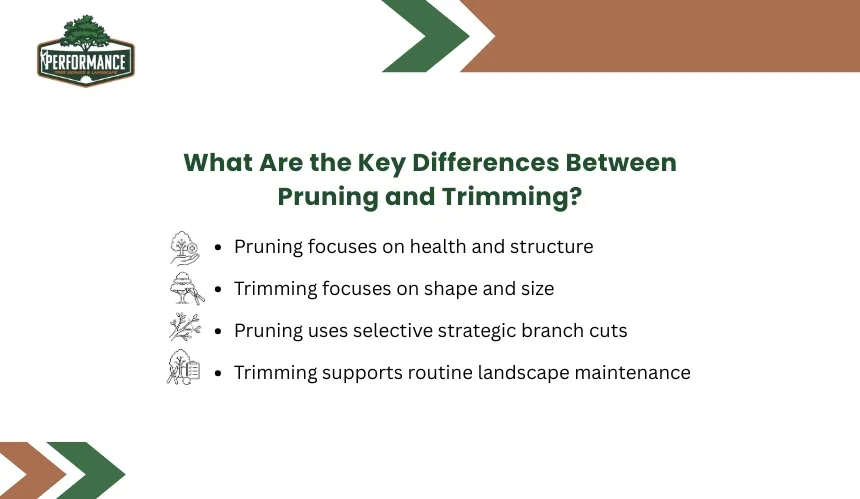
Although both services involve removing branches, their objectives are very different. Pruning is performed to improve tree health and structure, while trimming is generally performed to control growth and maintain appearance.
Understanding these differences helps homeowners choose the service that best matches the condition of the tree and the desired outcome.
Health-focused maintenance versus appearance-focused maintenance
One of the biggest differences is the reason the branches are removed. While both services can improve a tree’s condition, the primary objective behind each one is different.
Tree pruning is typically used to:
- Remove dead, diseased, or damaged branches
- Improve structural integrity
- Encourage healthy growth
- Reduce safety risks
- Address specific health concerns
Tree trimming is typically used to:
- Control overgrowth
- Maintain shape and appearance
- Improve landscape aesthetics
- Keep branches away from structures
- Manage canopy size
Timing, techniques, and common objectives
Pruning is often scheduled based on the tree’s health, growth cycle, or the presence of structural issues. The cuts are usually selective and focused on specific branches that affect the tree’s condition.
Trimming is commonly performed as part of routine landscape maintenance. It often involves shaping the canopy, reducing excessive growth, and maintaining a consistent appearance throughout the property.
Why Understanding the Difference Matters for Long-Term Tree Care

Choosing between pruning and trimming is important because each service addresses different needs. Using the right approach helps maintain healthier trees, improves safety, and supports better growth over time.
Understanding the purpose of each service also helps homeowners avoid unnecessary work and ensure problems are addressed correctly.
How the right service helps maintain healthier trees
Pruning and trimming both contribute to tree care, but they provide different benefits. Selecting the appropriate service allows the tree to receive maintenance based on its specific condition.
Benefits of choosing the correct approach include:
- Better overall tree health
- Improved branch structure
- Reduced safety risks
- More balanced growth
- Enhanced appearance and landscape value
Why choosing the wrong approach can create problems
Relying on trimming when a tree actually needs pruning may leave disease, decay, or structural problems unresolved. Likewise, excessive pruning performed unnecessarily can place stress on otherwise healthy trees.
Using the wrong method can eventually lead to additional maintenance needs, increased safety concerns, and reduced tree health. Understanding the difference helps ensure that maintenance decisions support the long-term condition of the tree.
Frequently Asked Questions
Is tree pruning the same as tree trimming?
No. Tree pruning focuses on tree health, structural stability, and safety, while tree trimming is mainly performed to manage growth and maintain appearance. Although both involve branch removal, they serve different purposes.
Which service is better for removing dead or diseased branches?
Tree pruning is generally the preferred option for removing dead, damaged, or diseased limbs. Pruning targets specific branches that affect the health and long-term stability of the tree.
How often should trees be trimmed?
Many mature trees benefit from trimming every 3 to 5 years, while faster-growing species may require maintenance every 2 to 3 years. The ideal schedule depends on the species, growth rate, and surrounding conditions.
How often should trees be pruned?
Most established trees only require pruning every 3 to 5 years, although younger trees may need more frequent structural pruning to encourage healthy development. Trees with storm damage, disease, or safety concerns may require attention sooner.
Can a tree need both pruning and trimming?
Yes. A tree may need pruning to remove unhealthy branches and trimming to control overgrowth or maintain appearance. Both services can work together as part of a long-term tree care plan.